How Worlds Are Made
A YouTube channel of space documentaries where every scene is generated by code — no one ever opens the 3D software.
visit channel
martín el cheikh — ai evaluation & systems engineer · buenos aires
I fix the scorers inside AI-safety benchmarks, run frontier models on brand-new silicon, and build products end to end. Twelve years in regulated pharmaceutical manufacturing and a psychology training in measurement taught me the same lesson twice.
ai evaluation — uk ai security institute
Governments and labs decide how safe a frontier model is by running benchmarks — and benchmarks are code. When a scorer misreads its judge or quietly drops a sample, the published number changes and nobody notices.
I read the scorers of Inspect, the UK AI Security Institute's open evaluation suite, the way a psychometrician reads a test: does this measure what it claims? When it doesn't, I send the fix.
inference & infrastructure
I run frontier-size models on a consumer Blackwell GPU (RTX 5090, SM120) — hardware the big projects' CI doesn't cover — and fix what breaks upstream.
$ states as of 29 Sep 2026 · every row links to the pull request · full list on github
flagship — the ledger
The Ledger turns dense financial paperwork into analysis people actually read and watch. I built the whole operation — the product, the pipeline behind it, and the infrastructure that keeps it cheap — and it publishes daily, mostly without me touching it.
regulatory filings, the moment they drop — thousands of pages nobody has time for.
every number in every piece is verified against the original source before anything goes out.
written analysis on the site, short market videos, and full documentaries on YouTube.
founder — verlet studio
Verlet makes deterministic 3D films of how real machines work — fusion devices, telescopes, tablet presses — built from published engineering models, with every figure on screen read off the geometry. Same scene in, same frames out, every time.
Everything below was rendered in-house: scenes described in code, lit and filmed by scripts, finished on my own GPU. Actual frames, not mockups.
A YouTube channel of space documentaries where every scene is generated by code — no one ever opens the 3D software.
visit channel
The flagship episode: researched, written, narrated, illustrated and cut by the pipeline — then published on schedule.
watch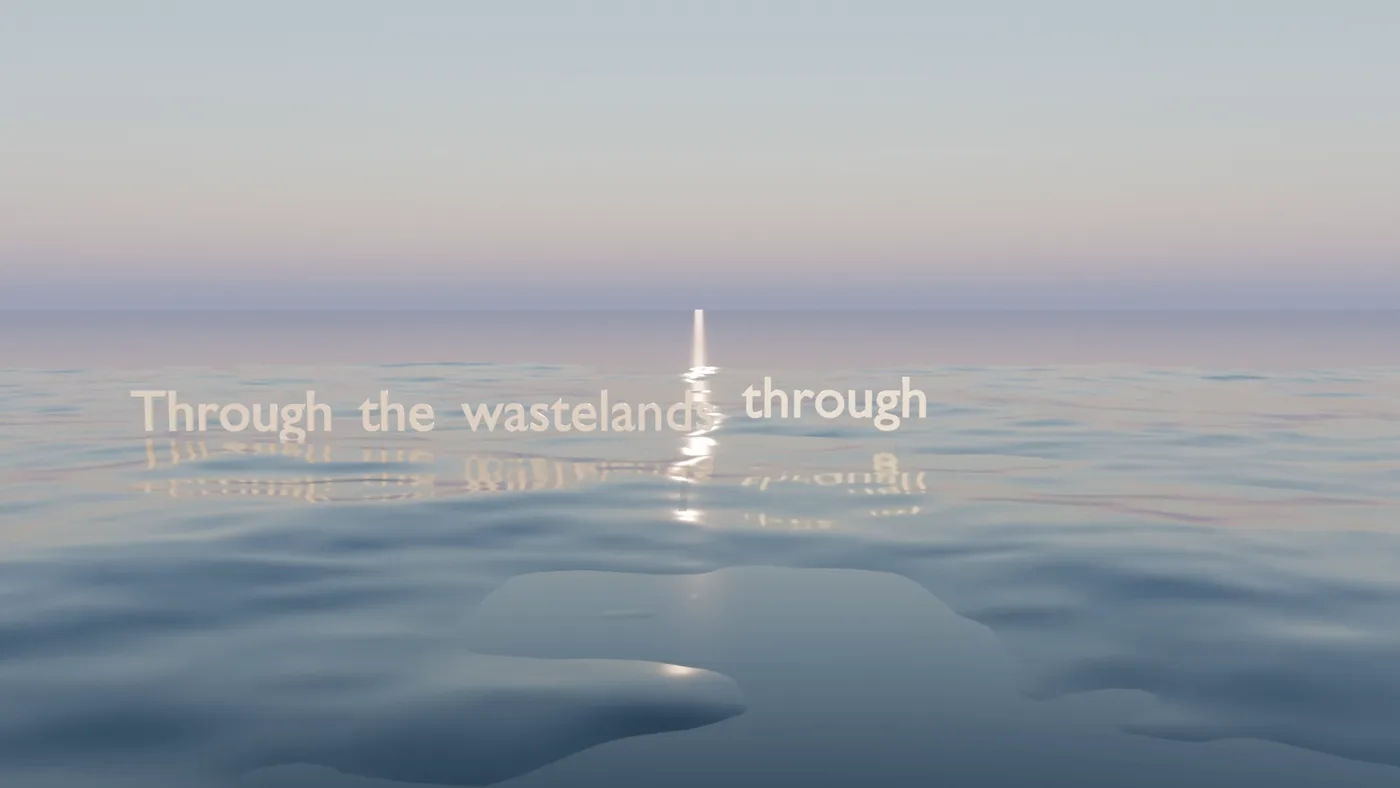
Lyric videos where each sung word lands on a simulated ocean and leaves real ripples, in time with the voice.
client work
Online store for a mate & thermos brand — catalog, stock and checkout the way people actually buy here.
visitCanoe tours in Vitória — an instant quote engine that turns visitors into booked paddlers over WhatsApp.
A va'a club's full home on the web — activities, store and a back office the club runs on its own.
A furniture factory's catalog where you build your own couch and talk straight to the maker.
lab notes
I trained a language model on the complete works of Lacan and Freud, and built it a memory and a retraining loop — it keeps studying on its own.
The Argentine market publishes its daily numbers as a phone-book-sized PDF. I turned it into a clean, queryable database — every evening, automatically.
This laptop's four speakers didn't work properly on Linux. I shipped a userspace workaround, then found the proper fix already in the kernel driver — and marked my own repo as superseded, with a clean uninstall.
A real-time Counter-Strike assistant that watches the match state and talks tactics while you play.
background
A pharmaceutical batch, a psychological test and a model benchmark fail the same way: the number looks fine and the instrument is broken. I've spent my working life on the instrument.
2024 — now
remote
Evaluation fixes upstream, inference on consumer Blackwell, and two products of my own: The Ledger (2026) and Verlet Studio (2026).
2012 — 2024
Laboratorios Roemmers · pharmaceutical manufacturing
Twelve years under cGMP: batch records, deviation investigations, daily reconciliations. Where I learned that a record is wrong until it has been checked against its source.
in progress
Universidad de Buenos Aires
Experimental design and construct validity: the question of whether a test measures what it says it measures, which is the question behind every eval.
in progress
Universidad de Buenos Aires
Logic and argument analysis. Plus three years of seminars at the Escuela de la Orientación Lacaniana.
$ spanish (native, rioplatense) · english (C1/C2) · based in buenos aires, working worldwide
contact
Eval and research-engineering roles, a benchmark whose numbers you don't quite trust, software that has to ship, or a machine that needs explaining on screen — write me. I answer.
I'm Martín. I build from Argentina for wherever the work is. I surf, I paddle va'a, and I read Lacan — all of which somehow ended up in the work above.